Language
SEARCH
-
AllTradingPlatformsAcademyAnalysisPromotionsAbout
-
Search query too short. Please enter a full word or phrase.
-
Keywords
- Forex Trading
- Vantage Rewards
- Spreads
Popular Search
- Trading Accounts
- MT4
- MT5
- Copy Trading
- Promotions
Exchange-Traded Funds (ETFs) have become an increasingly popular investment instrument among retail and institutional investors alike. Offering a cost-efficient, diversified, and flexible way to gain exposure to various asset classes, ETFs are well-suited for traders seeking both short-term opportunities and long-term investment strategies.
In this guide, learn more about how to trade ETFs to maximise your investment strategies.
How Do ETFs Work?
ETFs are investment funds that are listed and traded on stock exchanges, similar to individual stocks.
Each ETF holds a basket of securities, which can include equities, bonds, commodities, or a combination of these. The fund's objective is typically to track the performance of a specific index, sector, or asset class.
Key features of ETFs include:
- High Liquidity: Many ETFs are highly liquid, making them suitable for active trading strategies.
- Intraday Tradability: ETFs can be bought and sold throughout the trading session at market prices, unlike mutual funds, which are priced only once at the end of the trading day.
- Greater Control: This flexibility allows traders more precise control over their entry and exit points.
- Diversification Opportunities: Trading ETFs gives you exposure to multiple assets through a single trade.
- Lower Costs: ETFs typically have lower fees compared to actively managed funds.
-
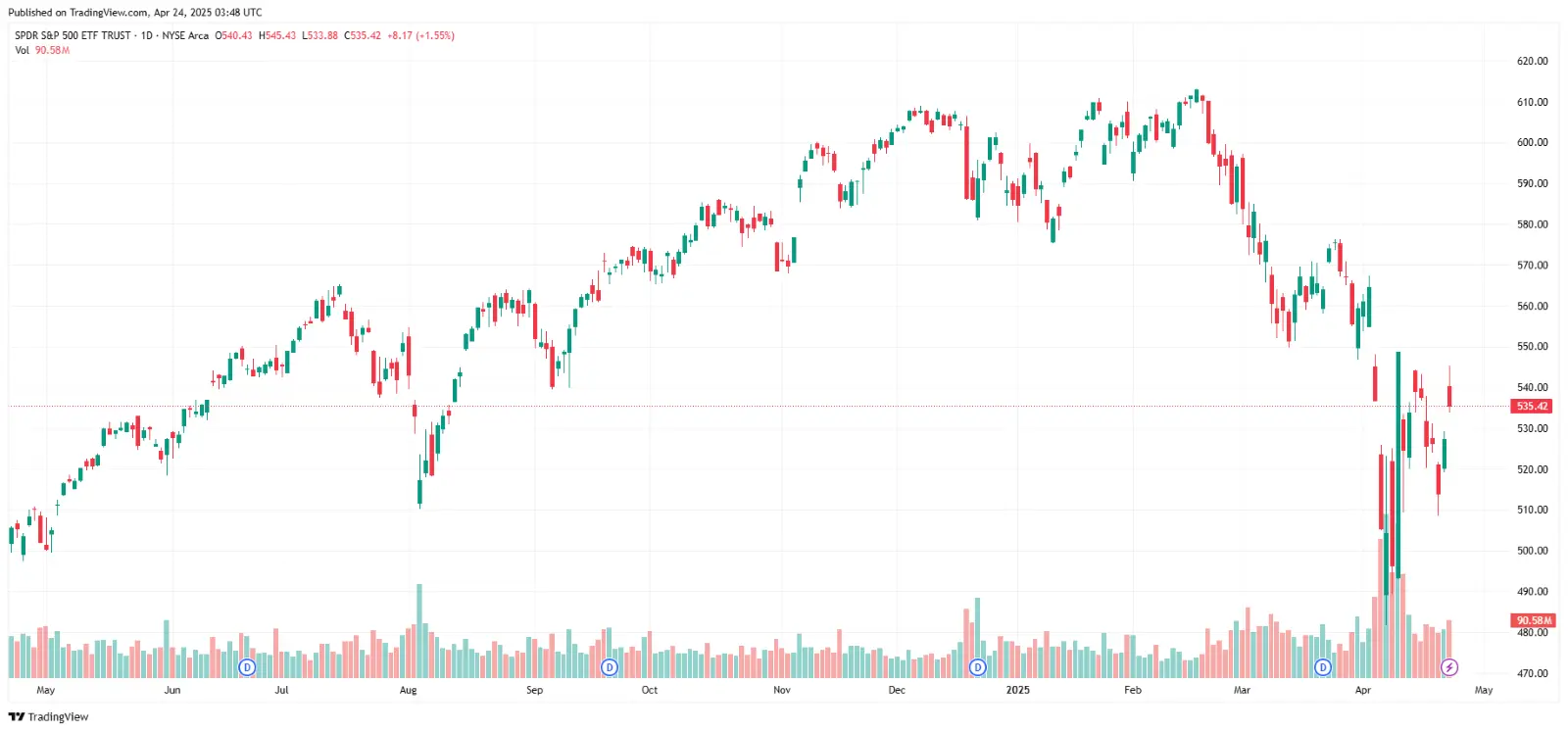
SPDR S&P 500 ETF (SPY): Tracks the performance of the S&P 500 Index, representing large-cap US equities such as Apple, Microsoft, and Johnson & Johnson.
Chart 1: SPY’s performance over the past year (Source: https://www.tradingview.com/x/Hkj1HgmY/)
-
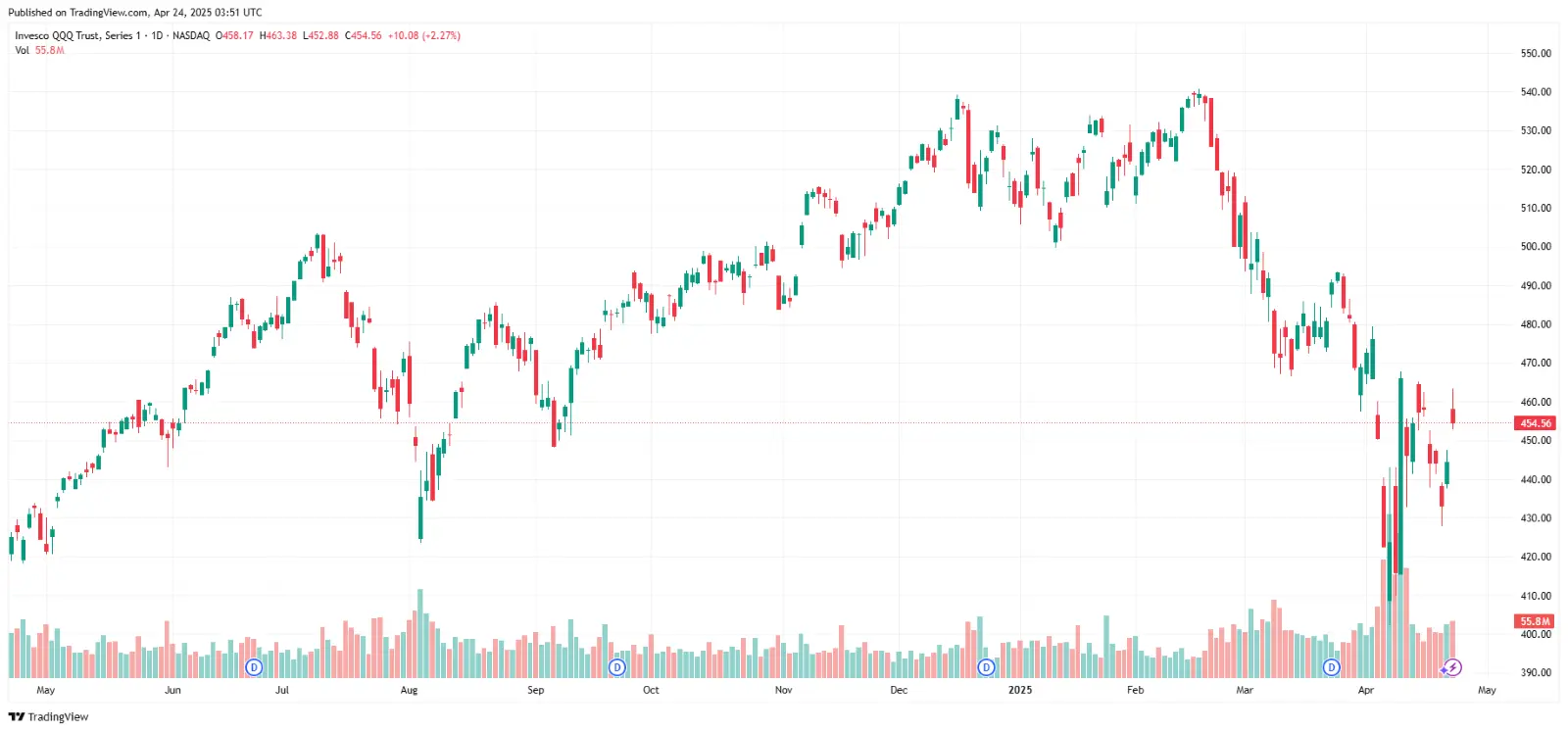
Invesco QQQ ETF (QQQ): Mirrors the Nasdaq-100 Index, focusing on tech-heavy and growth-oriented companies including Alphabet, Amazon, and NVIDIA.
Chart 2: QQQ’s performance over the past year (Source: https://www.tradingview.com/x/Pmbz9xvn/)
-
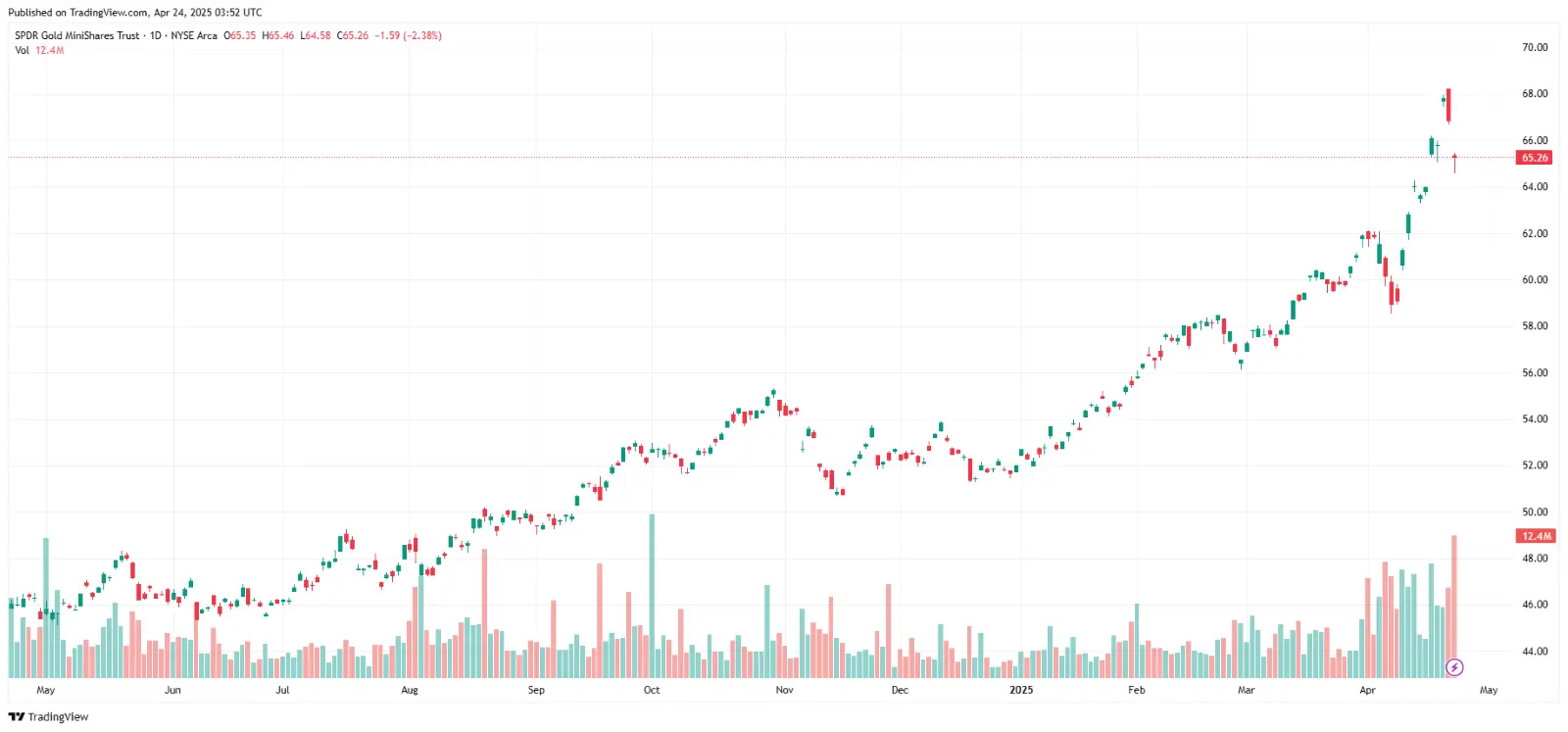
SPDR Gold MiniShares ETF (GLDM): Provides exposure to the price of gold bullion, ideal for traders interested in commodities tied to the value of physical gold.
Chart 3: GLDM’s performance over the past year (Source: https://www.tradingview.com/x/KZiiuRHY/)
-
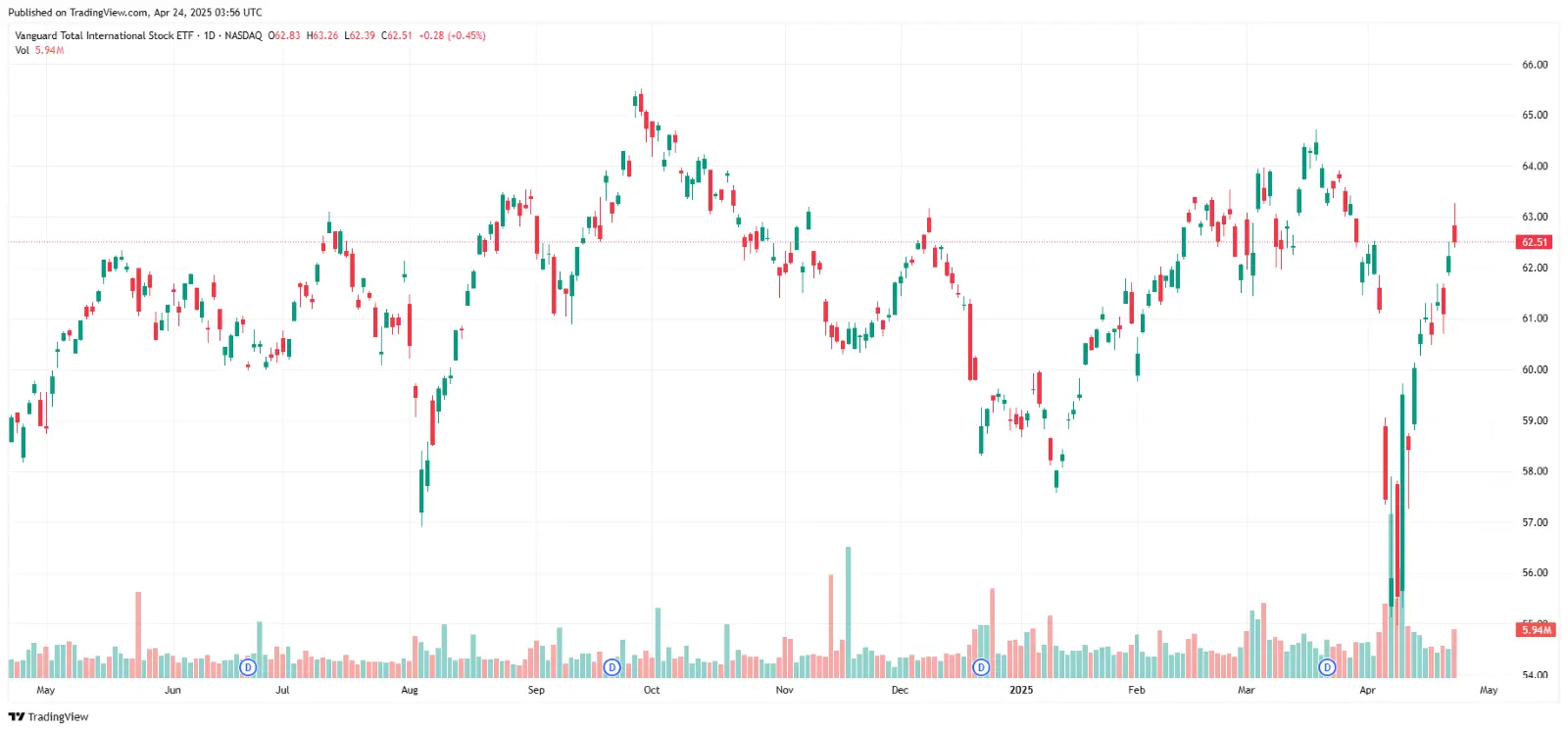
Vanguard Total International Stock ETF (VXUS): Provides access to a broad range of non-US equities, including Nestlé, Samsung Electronics, and Toyota.
Chart 4: VXUS’ performance over the past year (Source: https://www.tradingview.com/x/GOSVDe4n/)
-
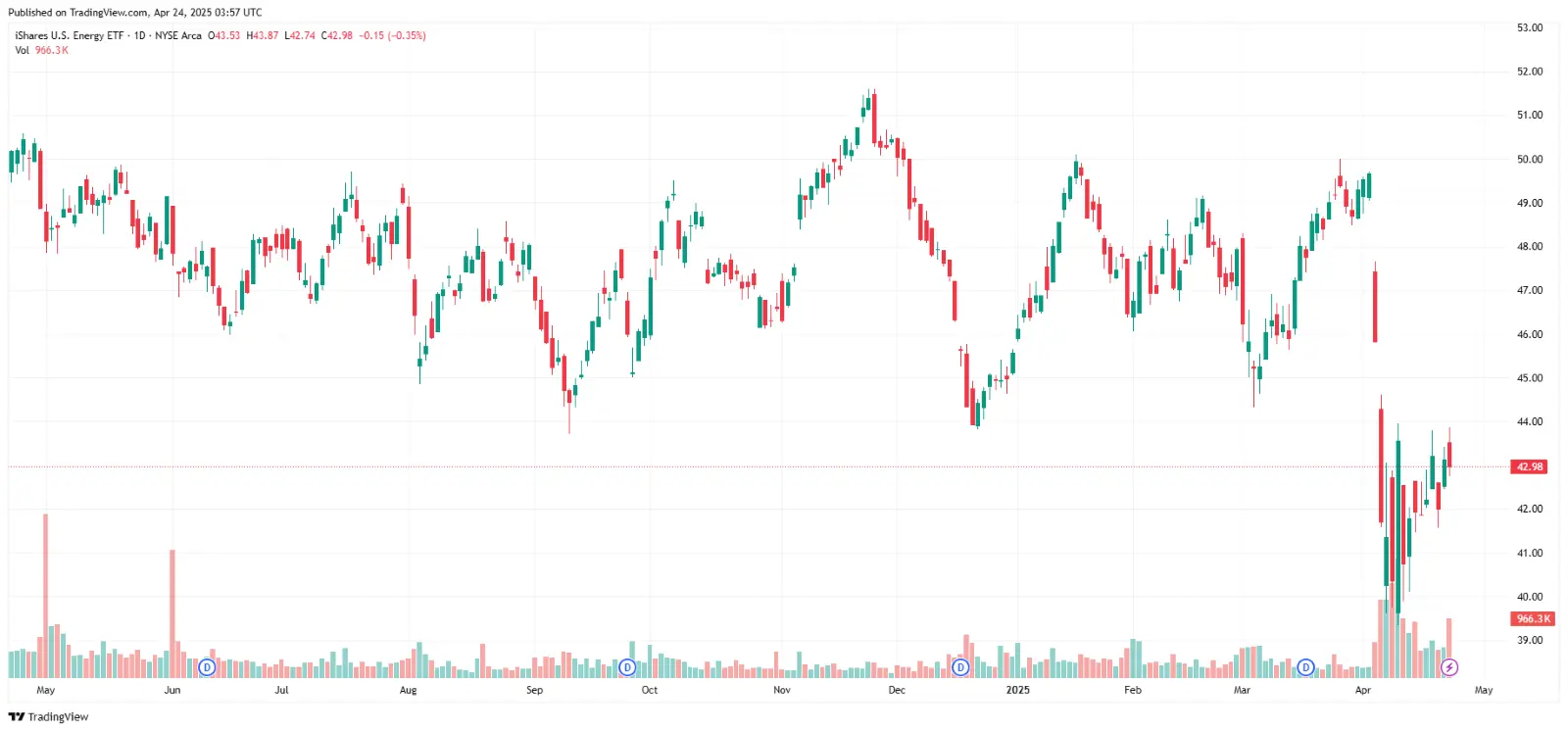
iShares US Energy ETF (IYE): Focuses on major US energy sector companies, including ExxonMobil, Chevron, and ConocoPhillips.
Chart 5: IYE’s performance over the past year (Source: https://www.tradingview.com/x/QNSCGxiH/)
-
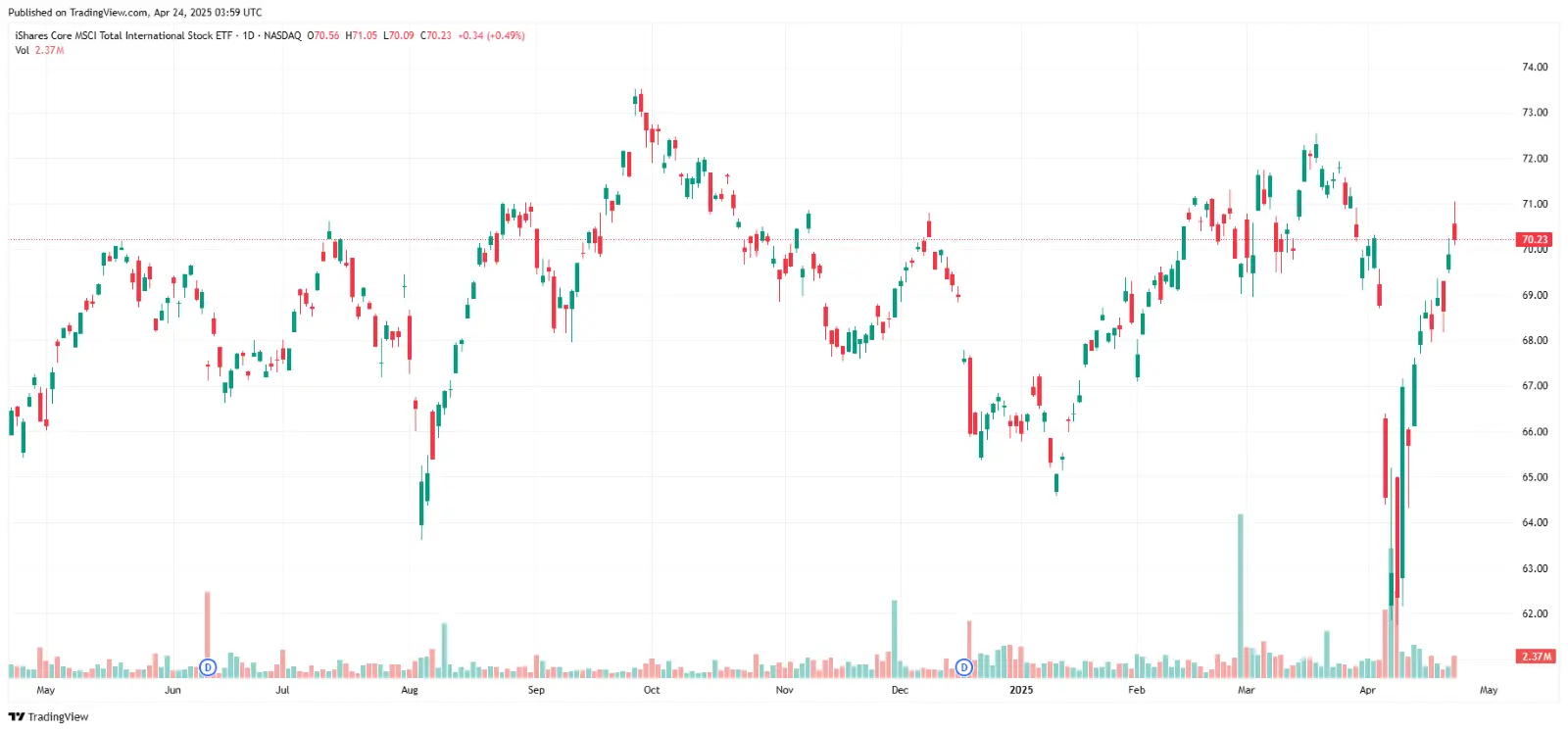
iShares Core MSCI Total International Stock ETF (IXUS): Aims to track the investment results of an index composed of non-US developed and emerging market equities, such as Tencent, Royal Dutch Shell, and Unilever.
Chart 6: IXUS’ performance over the past year (Source: https://www.tradingview.com/x/8DKhTd1L/)
How to Trade ETFs
Trading ETFs effectively requires a comprehensive understanding of the market dynamics and the specific characteristics of the ETF in question.
- Understand What Moves the ETF Markets
ETF prices are influenced by the performance of the underlying assets, broader market sentiments, economic data releases, geopolitical developments, and sector-specific news. Staying informed on these factors is essential for timing your trades. - Pick the Right ETFs to Trade
Here are a few things to consider before selecting ETFs to trade:Type of ETF: Equity, fixed income, commodity, sector-specific, thematic, or inverse ETFs.
ETF Size: Larger funds often offer better liquidity and tighter bid-ask spreads.
ETF Structure: Some ETFs are physically backed, while others use derivatives. Understanding the structure helps assess associated risks.
- Trade ETFs Using Technical Analysis
Technical analysis plays a key role in short-term ETF trading. Common tools include moving averages, trendlines, the relative strength index (RSI), and volume indicators. These can help identify entry and exit points based on price patterns and momentum. - Execute ETF Trading Strategies
Depending on your risk tolerance and market view, you may adopt various strategies, such as:Trend following
Mean reversion
Sector rotation
Each strategy requires discipline and a clearly defined plan, including stop-loss and take-profit levels. - Decide How You Want to Trade ETFs
Traders can access ETFs through various platforms, including traditional brokerages and online trading platforms like Vantage.Long-Term Investing: Building a diversified portfolio with buy-and-hold strategies.
Swing Trading: Capitalising on medium-term price movements.
Day Trading: Making intraday trades to benefit from short-term volatility.
Explore More About ETF Trading

Award-Winning Broker
-
Best CFD
BrokerGlobal Brands Magazine
-
Best Multi-
Asset BrokerGlobal Business and Finance Magazine
-
Best CFD
Trading PlatformInternational Business Magazine

Trade ETF CFDS On Different Types Of Trading Platforms
MetaTrader 4
- 30 Built-in technical indicators
- 31 Analytical Charting Tools
- 9 Time-Frames
- 4 Types of trading orders
MetaTrader 5
- 38 Built-in technical indicators
- 44 Analytical Charting Tools
- 21 Time-Frames
- 6 Types of trading orders
TradingView
- 15+ chart types
- 100+ in-built indicators
- 50+ Drawing tools
- 12 alert conditions
Vantage Mobile App
- 55 Deposit Methods Globally
- 220+ Daily Product Analysis
- 16 TradingView Indicators
- 80,000+ Copy Traders
Choose a Trading Account Based on Your Experience Level
-
1
Beginner Traders
For beginner traders looking for direct market access with no commissions.
- Tight spreads from 1.1 pip.
- No extra commissions on trading volume.
-
2
Experience Traders
Offering seasoned traders razor-sharp spreads, low commissions, and deep liquidity.
- Tight spreads from 0.0 pip.
- Commisssions from USD$3.00 per standard lot, per side.
-
3
Professional Traders
For professional traders and money managers who trade large volumes.
- Tights spreads from 0.0 pip.
- Commissions from USD$1.50 per standard lot, per side.

-
1
Register
Quick and easy account opening process.
-
2
Fund
Fund your trading account with an extensive choice of deposit methods.
-
3
Trade
Trade with spreads starting as low as 0.0 and gain access to over 1,000+ CFD Instruments.
Frequently Asked Questions
-
1
Is trading ETFs profitable?
Trading ETFs has the potential to be profitable; however, outcomes vary based on factors such as market conditions, individual trading strategies, risk management practices, and execution.
It is important to conduct thorough research and maintain a disciplined approach, bearing in mind that all trading involves risk and past performance is not indicative of future results.
-
2
What are the top 3 ETFs?
The top ETFs by trading volume and investor interest often include:
SPDR S&P 500 ETF (SPY)
Invesco QQQ ETF (QQQ)
iShares Core U.S. Aggregate Bond ETF (AGG)
However, the best choice depends on your individual investment objectives.
-
3
How many ETFs should I own?
The ideal number of ETFs varies based on your investor profile. Some diversified portfolios may include between 3 and 10 ETFs to achieve exposure across different asset classes, sectors, and regions, although the appropriate number can vary widely.
-
4
Which ETFs offer the highest returns?
High-return ETFs typically involve greater risk. Technology-focused or sector-specific ETFs like QQQ may offer high returns, but volatility must be managed carefully.
-
5
Are ETFs beginner-friendly?
Yes, ETFs are generally considered beginner-friendly due to their diversification, liquidity, and cost efficiency. However, a basic understanding of market principles is essential before trading.