Language
SEARCH
-
AllTradingPlatformsAcademyAnalysisPromotionsAbout
-
Search query too short. Please enter a full word or phrase.
-
Keywords
- Forex Trading
- Vantage Rewards
- Spreads
Popular Search
- Trading Accounts
- MT4
- MT5
- Copy Trading
- Promotions
What Is a Bond?
A bond is essentially a loan. Instead of borrowing from a bank, companies and governments raise money directly from investors. In return, they commit to paying interest at regular intervals and repay the full amount—known as the face value—once the bond matures.
Each bond typically includes these key features:
- Issuer: The entity borrowing the funds.
- Face Value: The principal amount to be repaid at maturity.
- Coupon: The fixed or variable interest paid to the bondholder.
- Yield: The effective return, influenced by the bond’s price and interest rate.
- Maturity: The date on which the issuer repays the face value.
After issuance, bonds can be traded in the secondary market. Prices go up and down based on factors such as interest rates, credit ratings, and investor sentiment—offering both potential returns and risks.
How to Start Trading Bond CFDs
The strategies below are presented for educational purposes only and do not constitute trading advice. Past performance or approach does not guarantee future results.
Before trading bond CFDs, traders should first define their trading approach—whether it’s focusing on short-term opportunities driven by market volatility or adopting a long-term strategy based on broader macroeconomic trends.
Bond CFDs allow traders to speculate on bond price movements without owning the underlying asset. This flexibility may appeal to a range of traders. However, bond CFDs involve risks and may not be suitable for all investors.
Common bond CFD trading strategies to consider:
- Trend Following: Trade in the direction of broader interest rate or yield trends.
- Range Trading: Focus on buying low and selling high within defined price levels.
- News-Based Trading: React to central bank decisions or major economic releases.
- Spread Trading: Capitalise on price differences between various types of bonds or maturity dates.
Note: Each strategy involves its own level of risks and requires a clear understanding of market timing and volatility.
Steps to start trading bond CFDs:
- Choose a Reliable Broker: Select a provider offering a variety of bond CFDs. A good example is Vantage.
- Open & Fund Your Account: Complete the verification process and deposit funds to start trading bond CFDs.
- Select a Bond CFD: Choose your preferred CFD based on bond type or duration.
- Conduct Analysis: Use technical or fundamental tools to guide your trade.
- Place Your Trade: Set your position size, stop loss, and take-profit levels.
- Monitor Your Position: Stay updated on interest rate changes and economic news.
- Close Your Trade: Exit to secure gains or manage losses.
Why Trade Bond CFDs?
Bond CFDs offer traders a flexible way to diversify their portfolios and manage risk. These contracts provide exposure to a range of government and corporate bonds across different countries and sectors, without the need to own the underlying asset or commit large amounts of capital.
One of the key advantages of bond CFD trading is the ability to go long or short. Whether traders expect interest rates to rise or fall, bond CFDs let them act on their market view in real time, especially during major economic announcements or central bank decisions.
Another important factor is leverage, which can amplify both profits and losses. It is important to understand how leverage works and to use it with appropriate risk management. However, it’s crucial to manage leverage carefully with proper risk management techniques in place.
Explore More About Bonds Trading
-
Why Trade Bonds
Understand the appeal of bonds as a trading instrument. Explore their risk-return profile and their potential role in a diversified trading portfolio.
-
Bond Trading Strategies
Learn popular bond trading strategies and about factors that traders consider when developing strategies, along with key risks.
-
What Are Bonds?
Discover how bonds work, who issues them, and why they are often considered a core instrument in traditional and modern finance.

Award-Winning Broker
-
Best CFD
BrokerGlobal Brands Magazine
-
Best Multi-
Asset BrokerGlobal Business and Finance Magazine
-
Best CFD
Trading PlatformInternational Business Magazine

Trade Bond CFDS On Different Types Of Trading Platforms
MetaTrader 4
- 30 Built-in technical indicators
- 31 Analytical Charting Tools
- 9 Time-Frames
- 4 Types of trading orders
MetaTrader 5
- 38 Built-in technical indicators
- 44 Analytical Charting Tools
- 21 Time-Frames
- 6 Types of trading orders
TradingView
- 15+ chart types
- 100+ in-built indicators
- 50+ Drawing tools
- 12 alert conditions
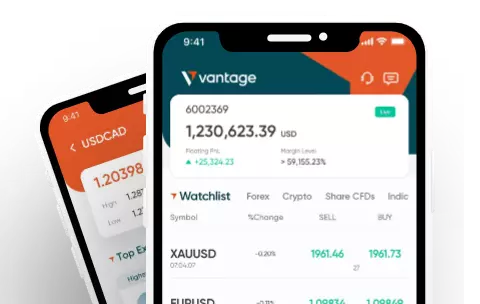
Vantage Mobile App
- 55 Deposit Methods Globally
- 220+ Daily Product Analysis
- 16 TradingView Indicators
- 80,000+ Copy Traders
Choose a Trading Account Based on Your Experience Level
-
1
Beginner Traders
For beginner traders looking for direct market access with no commissions.
- Tight spreads from 1.1 pip.
- No extra commissions on trading volume.
-
2
Experience Traders
Offering seasoned traders razor-sharp spreads, low commissions, and deep liquidity.
- Tight spreads from 0.0 pip.
- Commisssions from USD$3.00 per standard lot, per side.
-
3
Professional Traders
For professional traders and money managers who trade large volumes.
- Tights spreads from 0.0 pip.
- Commissions from USD$1.50 per standard lot, per side.

-
1
Register
Quick and easy account opening process.
-
2
Fund
Fund your trading account with an extensive choice of deposit methods.
-
3
Trade
Trade with spreads starting as low as 0.0 and gain access to over 1,000+ CFD Instruments.
Frequently Asked Questions
-
1
How do I trade bonds?
You can trade bonds through brokers offering bond markets or via bond CFDs. The latter allows traders to speculate on price without owning the bond itself.
If you’re interested in exploring bond CFDs, consider opening a live trading account with Vantage today.
-
2
Are bonds a good investment?
Bonds are known for offering regular income and typically less volatility than shares. However, they often deliver more modest returns in exchange for that stability.
-
3
What are some common bond-buying mistakes?
Many new investors tend to overlook the impact of interest rates, underestimate credit risk, or buy bonds without a clear strategy. Understanding the fundamentals can help you avoid these common pitfalls.
-
4
What are the basics of bond trading?
Bond trading involves speculating on price movements driven by interest rate changes, yield fluctuation, or broader economic trends. Many traders use bond CFDs to take advantage of short-term opportunities with greater speed and flexibility.
-
5
How is the bond trading price calculated?
Bond prices are influenced by several factors:
Face value
Coupon rate
Prevailing market interest rates
Time to maturity
Most brokers and trading platforms handle the calculations, but knowing the basics can help traders make more informed decisions.
RISK WARNING: CFDs are complex financial instruments and carry a high risk of losing money rapidly due to leverage. You should ensure you fully understand the risks involved and carefully consider whether you can afford to take the high risk of losing your money before trading.
Disclaimer: The information is provided for educational purposes only and doesn't take into account your personal objectives, financial circumstances, or needs. It does not constitute investment advice. We encourage you to seek independent advice if necessary. The information has not been prepared in accordance with legal requirements designed to promote the independence of investment research. No representation or warranty is given as to the accuracy or completeness of any information contained within. This material may contain historical or past performance figures and should not be relied on. Furthermore estimates, forward-looking statements, and forecasts cannot be guaranteed. The information on this site and the products and services offered are not intended for distribution to any person in any country or jurisdiction where such distribution or use would be contrary to local law or regulation.