Access Restricted
Your access to this website is restricted.
Our website and services are not available to, and are not intended for, individuals who are citizens or residents of the United States, or entities incorporated in or conducting business within the United States.
If this does not apply to you and you believe you have received this message in error, please contact us at [email protected] for further assistance.
If you fall into any of the above categories, please exit the site.
Important Information
Thank you for visiting the Vantage Markets website. Please note that this website is intended for individuals residing in jurisdictions where accessing it is permitted by Vantage and its affiliated entities do not operate in your home jurisdiction.
By clicking 'I CONFIRM MY INTENTION TO PROCEED AND ENTER THIS WEBSITE', you confirm that you are entering this website solely based on your initiative and not as a result of any specific marketing outreach. You wish to obtain information from this website based on reverse solicitation principles, in accordance with the applicable laws of your home jurisdiction.
I CONFIRM MY INTENTION TO PROCEED AND ENTER THIS WEBSITEen

Language
SEARCH
-
AllTradingPlatformsAcademyAnalysisPromotionsAbout
-
Search query too short. Please enter a full word or phrase.
-
Keywords
- Forex Trading
- Vantage Rewards
- Trading Fees
Popular Search
- Trading Accounts
- MT4
- MT5
- TradingView
- Promotions
Trading ETFs offers a unique blend of benefits that make them an attractive choice for both novice and experienced investors. Like individual stocks, ETFs are bought and sold on exchanges throughout the trading day, allowing investors to react quickly to market opportunities.
With the ability to diversify your portfolio and lower your investment costs, ETFs provide a powerful tool for achieving your financial goals. Learn more about how trading ETFs can enhance your investment strategy and help you build a more resilient portfolio.
Benefits of Trading ETFs
- Diversification: ETFs provide exposure to a broad range of assets within a single fund, helping to spread risk and reduce the impact of poor performance from any single investment. This makes it easier to build a well-rounded portfolio.
- Cost Efficiency: ETFs generally have lower expense ratios compared to mutual funds, meaning you pay less in management fees. This cost efficiency can significantly enhance your overall returns over time.
- Tax Efficiency: ETFs are often more tax-efficient than mutual funds because they typically generate fewer capital gains distributions. This can help minimise your tax liability and allow you to retain more of your investment gains.
- Transparency: ETFs disclose their holdings daily, so you always know what assets you own. This transparency helps you make more informed investment decisions and ensures your portfolio stays aligned with your financial goals.
Disadvantages of Trading ETFs
- Less Diversification: Although ETFs provide diversification, some may not be as diversified as they appear. For example, sector-specific or thematic ETFs can be heavily concentrated in a particular industry or theme, which may increase portfolio risk.
- Lower Dividend Yields: ETFs that track broad market indices may offer lower dividend yields compared to individual high-dividend stocks or specialised dividend-focused funds. This can be a disadvantage for income-focused investors seeking higher cash flows.
- Potential Higher Costs: When you trade ETFs, you pay an ongoing management fee, which is not charged when you hold individual stocks. Although the commission to the broker might be similar for both, the additional management fee can make ETFs comparatively more expensive over time.
- Skewed Leveraged ETF Returns: Leveraged ETFs use financial derivatives and debt to magnify the daily returns of an underlying index. However, due to compounding and market volatility, their long-term performance can significantly deviate from the expected multiple of the index’s returns.
Holding leveraged ETFs over extended periods can result in unexpected and magnified losses, making them more suitable for short-term, tactical strategies with careful risk management.
Should You Trade ETFs?
Trading ETFs can be a great way to help diversify your portfolio and reduce risk. With their low costs and tax efficiency, ETFs offer an attractive option for many investors. However, whether ETFs are right for you ultimately depends on your risk appetite and trading style.
If you prefer a flexible, cost-effective investment that provides broad market exposure, ETFs might be a strong fit. Still, it’s important to evaluate your financial goals, risk tolerance, and investment horizon before making any decisions
Explore More About ETF Trading

Award-Winning Broker
-
Most Innovative
BrokerFX Broker Tester
-
Best CFD
BrokerGlobal Brands Magazine
-
Best APAC
Region BrokerADVFN International Financial Awards

Trade ETF CFDS On Different Types Of Trading Platforms
MetaTrader 4
- 30 Built-in technical indicators
- 31 Analytical Charting Tools
- 9 Time-Frames
- 4 Types of trading orders
MetaTrader 5
- 38 Built-in technical indicators
- 44 Analytical Charting Tools
- 21 Time-Frames
- 6 Types of trading orders
TradingView
- 15+ chart types
- 100+ in-built indicators
- 50+ Drawing tools
- 12 alert conditions
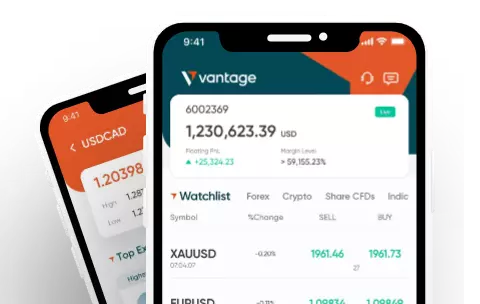
Vantage Mobile App
- 55 Deposit Methods Globally
- 220+ Daily Product Analysis
- 16 TradingView Indicators
- 80,000+ Copy Traders
Choose a Trading Account Based on Your Experience Level
-
1
Any level
-
2
Beginner Traders
For beginner traders looking for direct market access with no commissions.
- Tight spreads from 1.1 pip.
- No extra commissions on trading volume.
-
3
Experience Traders
Offering seasoned traders razor-sharp spreads, low commissions, and deep liquidity.
- Tight spreads from 0.0 pip.
- Commisssions from USD$3.00 per standard lot, per side.
-
4
Professional Traders
For professional traders and money managers who trade large volumes.
- Tights spreads from 0.0 pip.
- Commissions from USD$1.50 per standard lot, per side.
-
1
Register
Quick and easy account opening process.
-
2
Fund
Fund your trading account with an extensive choice of deposit methods.
-
3
Trade
Trade with spreads starting as low as 0.0 and gain access to over 1,000+ CFD Instruments.
Frequently Asked Questions
-
1
Why are ETFs traded?
ETFs are traded because they offer a convenient way to invest in a diversified portfolio of assets. They combine the benefits of mutual funds with the flexibility to trade like individual stocks, allowing investors to buy and sell shares throughout the trading day at market prices.
This makes ETFs a potential option for those looking to gain broad asset exposure with the ease of stock trading.
-
2
What are the benefits of Trading ETFs?
Diversification: ETFs provide exposure to a wide range of assets within a single fund, helping to spread risk and reduce the impact of poor performance from any single investment.
Low Cost: ETFs generally have lower expense ratios compared to mutual funds, meaning you pay less in management fees, which can enhance your overall returns.
Tax Efficiency: ETFs are often more tax-efficient than mutual funds because they typically generate fewer capital gains distributions, minimising tax liability.
Transparency: ETFs disclose their holdings daily, allowing you to always know exactly what assets you own, which helps you make more informed investment decisions.
-
3
Why are ETFs better than stocks?
For some investors, ETFs can be better than individual stocks because the former offers diversification, which can help reduce the risk associated with investing in a single company.
Additionally, ETFs generally have lower costs and provide the flexibility to trade throughout the day like stocks. They also offer tax efficiency and transparency, making them a versatile and attractive investment option for many.
-
4
Is it good to trade an ETF?
Trading ETFs can be a good option for many investors due to their benefits, such as diversification, low costs, and tax efficiency. However, whether ETFs are good for you depends on your individual risk appetite and trading style.
If you prefer a flexible, cost-effective investment that provides broad market exposure, ETFs might be a suitable choice. It’s important to evaluate your financial goals and risk tolerance before making any investment decisions.